Where you plant matters most

Planting for natural shade means matching species to your site conditions so your tree can thrive and enhance your home.

Think about how sun, shade and shelter shape your garden. The right tree in the right position delivers cooling shade, wildlife habitat and long-term health.

North-facing side: trees should be at a distance from the north-facing side to allow daylight into the building.

East-facing walls: evergreen trees spaced at a distance provide shading for east-facing walls.

West-facing walls: evergreen, closely spaced trees and shrubs shade west-facing walls and reduce solar gain.

Wind management: use a plantation for funneling wind to or away from the building as required.

South side: deciduous trees provide solar access during winter along with deep verandahs, while giving summer shade.
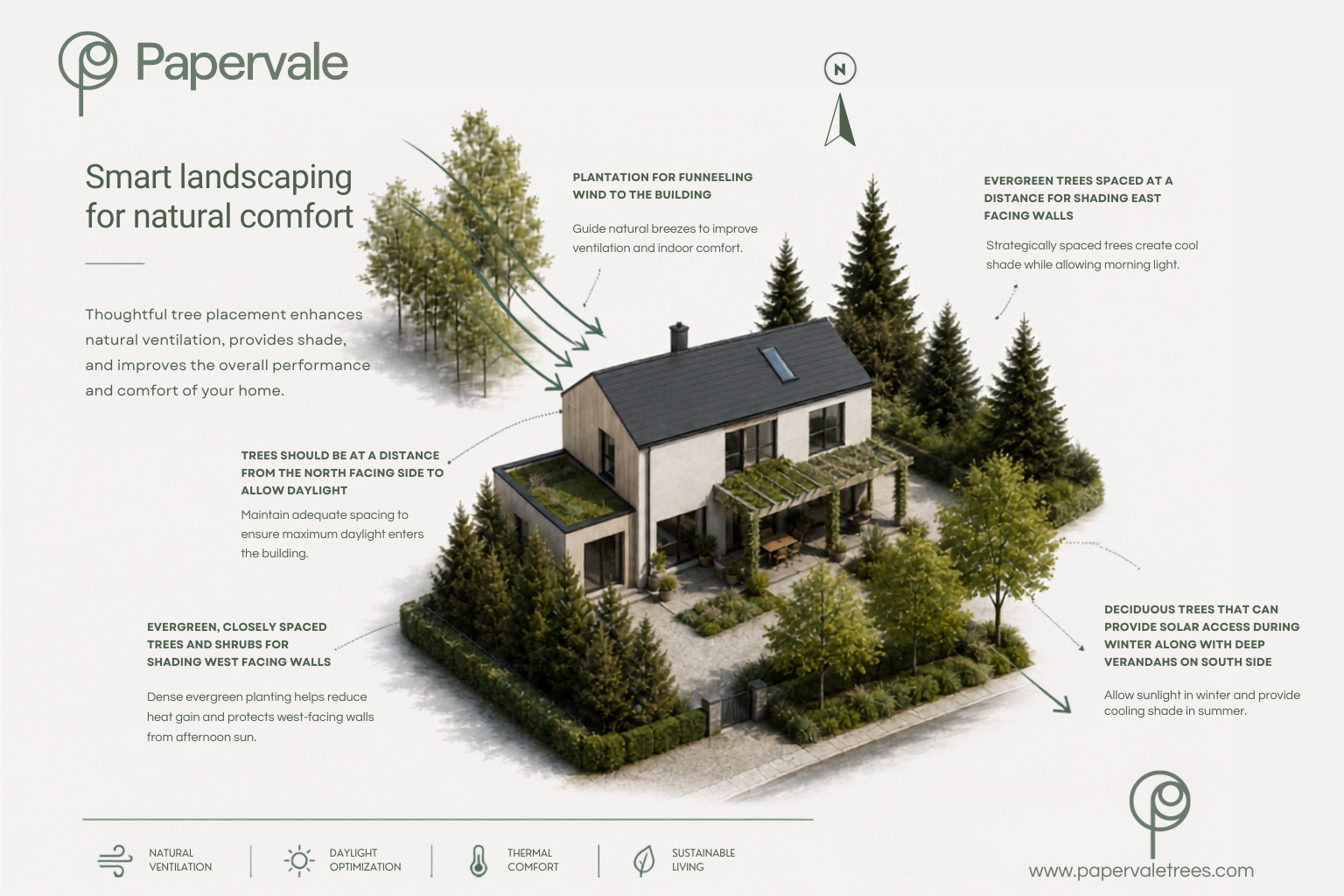
Planting guide showing natural shade and tree placement in the garden

The right tree in the right place adds real value

Correctly placed trees can reduce home energy consumption up to 15% and add 15–20% to your property value in most cases.

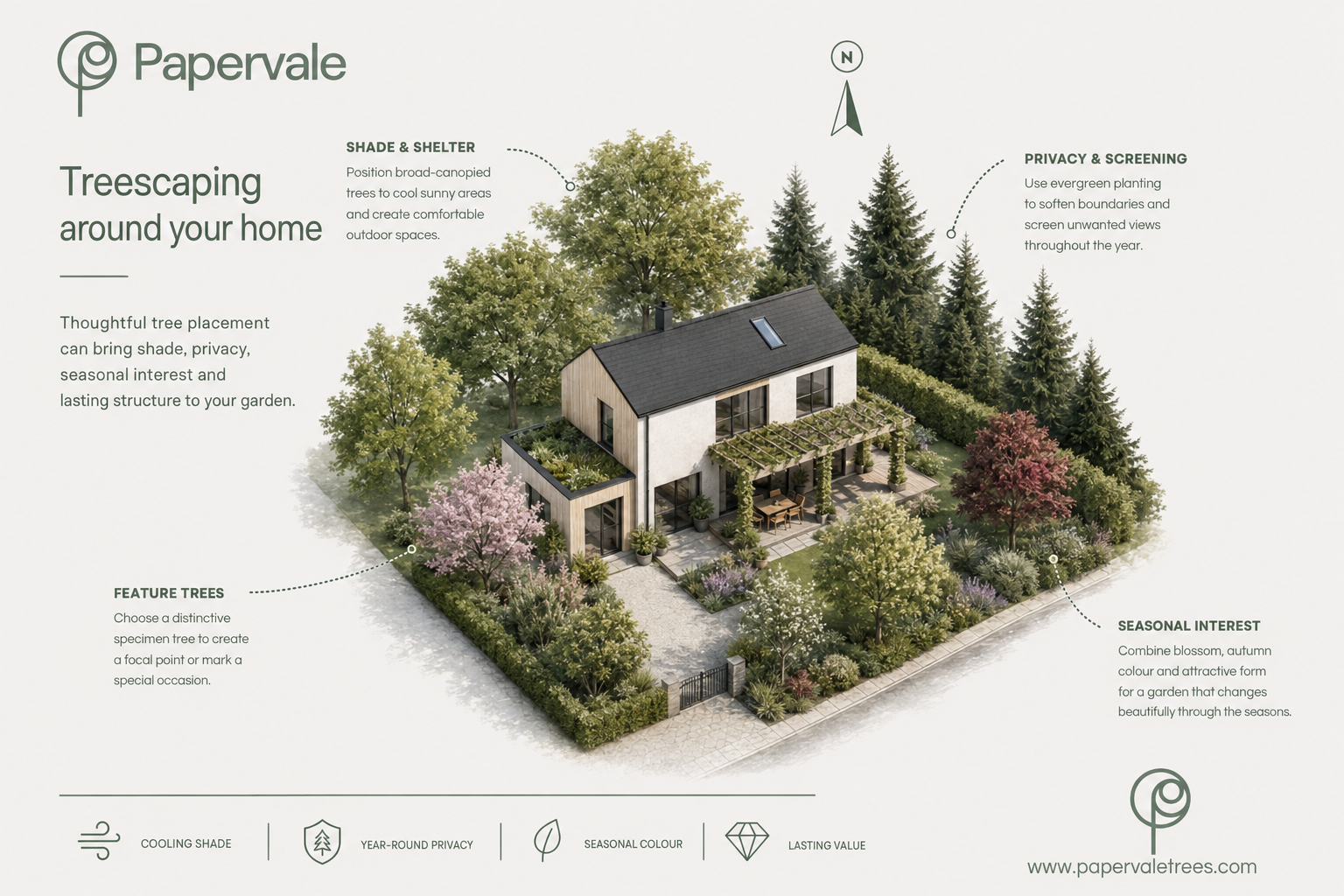
Correct placement of trees allows you to celebrate your home's architecture. Think carefully about what role each tree plays: shade, screening, structure or seasonal beauty.

Shade trees: plant to cool your home and conserve energy. Properly placed shade trees provide shade for roofs, walls, windows and air conditioners. Species to consider: Shumard Red Oak, Bur Oak, Live Oak, Cedar Elm, Bald Cypress.

Majestic trees: plant in your backyard to be enjoyed for generations. Species to consider: DD Blanchard Southern Magnolia, Shumard Red Oak, Live Oak, Chinese Pistache, Autumn Blaze Maple.

Value trees: trees strengthen the maturity and marketability of your home. Species to consider: Chinese Pistache, Live Oak, Shumard Red Oak, Cedar Elm, Autumn Blaze Maple, Bur Oak, Lace Bark Elm.

Screening trees: plant to screen undesirable views and provide a privacy buffer. Species to consider: Eastern Red Cedar, DD Blanchard Southern Magnolia, East Palatka Holly.

Ornamental trees: plant for accent and beauty. Species to consider: Vitex, Crepe Myrtle, Desert Willow, Little Gem Magnolia.

🧭

Note the directional placement: always consider the compass orientation of your site before selecting and positioning trees for maximum effect.

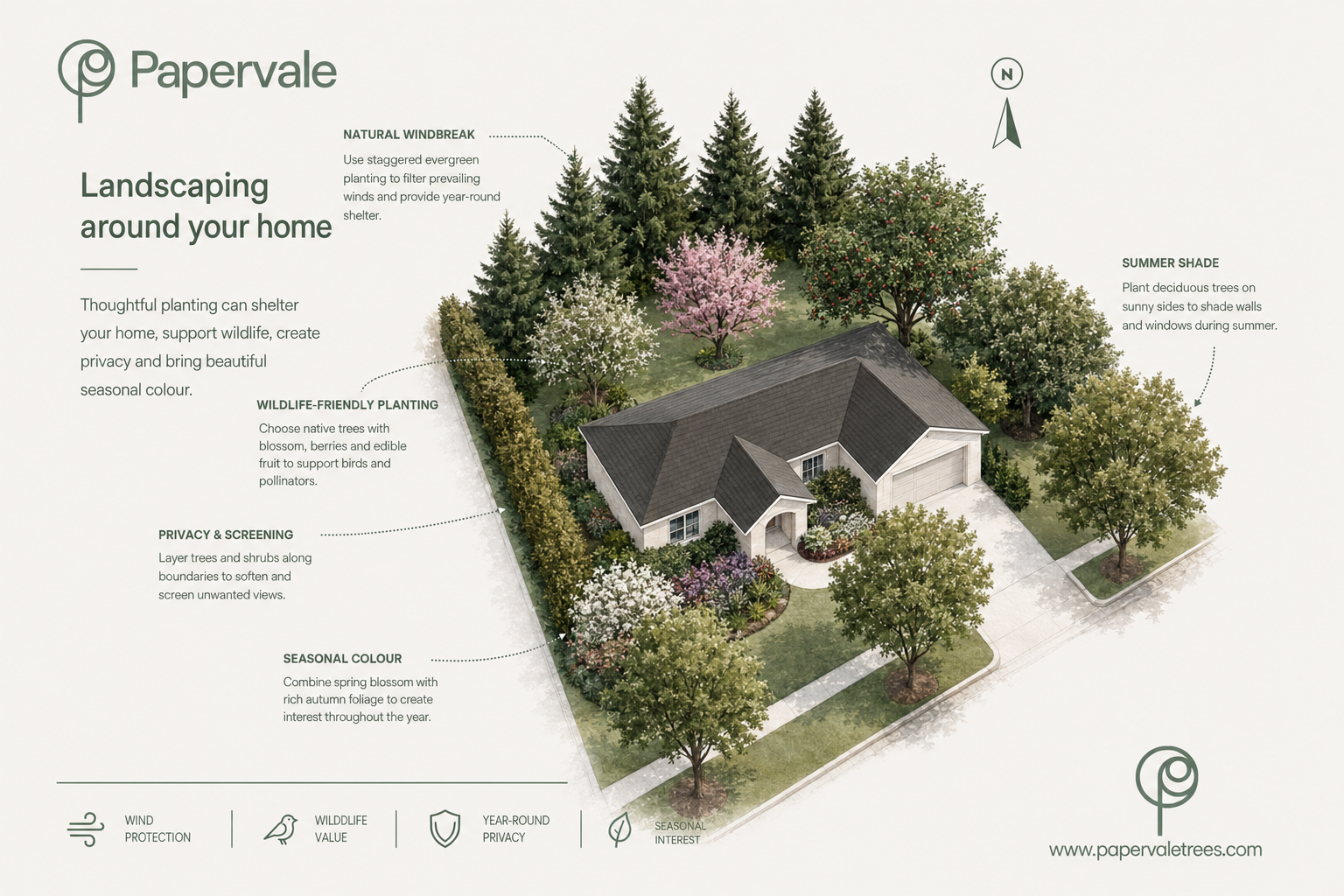
Treescaping illustration showing tree placement and landscape structure around a home

Creating a landscape that works for you

A well-planned landscape uses trees purposefully; every species earns its place.

Whether you're designing a residential garden, a commercial project or a public planting scheme, the placement of each tree should be considered carefully against your site's conditions and the year-round effect you want to achieve.

Windbreaks: plant evergreen trees between your house and the prevailing winter winds to serve as a windbreak and help reduce utility bills.

Summer shade: plant deciduous trees on the south and west sides of your house to shade your roof, walls and windows during the summer.

Wildlife value: plant native trees and shrubs with berries, flowers and edible fruit to attract birds and other wildlife.

Screening: plant to screen undesirable views while enhancing the character of your outdoor space.

Seasonal colour: plant trees and shrubs with spring flowers and autumn colour to accent your landscape.

Landscaping illustration showing trees placed for form, function and seasonal interest

Ready to plant?

Once you've found your perfect tree, our comprehensive planting guide walks you through everything from preparation to aftercare. Or browse our full selection and get started today.

📞
Call us 028 3085 0059
✉️
🕐
Opening hours Mon–Fri by appointment · Sat 10am–2pm
📋
View current availability Download stock list →